How Much Activity Do Adults Need Each Week?
Disclosure: Some links in this post are (or may become) affiliate links. If you buy through them, FitVibeLife may earn a small commission at no extra cost to you. We also sell our own guides. Learn more.

If you have ever wondered whether your walks and short workouts "count," you are not alone. U.S. public-health guidelines give a clear, realistic target for most adults, and you can work toward it in small pieces.
The basic weekly target
The Physical Activity Guidelines for Americans and the CDC's summary for adults advise most adults to aim for:
- At least 150 minutes a week of moderate-intensity aerobic activity (such as brisk walking), or 75 minutes a week of vigorous activity (such as jogging), or a mix of the two
- Muscle-strengthening activity on 2 or more days a week, working the major muscle groups
Moderate activity usually means you can talk but not sing. Vigorous activity means talking in full sentences is harder. Brisk walking, cycling on level ground, dancing and water aerobics often fall in the moderate range. The same guidelines note that moving more than this, when you are able, is associated with additional health benefits, and that some activity is better than none.

You can split it up
One hundred and fifty minutes sounds like a lot until you break it down. Thirty minutes of brisk walking on five days is 150 minutes. Three 10-minute walks also add up. The guidelines allow activity to be accumulated through the week, so you do not have to do it all in one session.
If you are starting from very little movement, build slowly. Add a few minutes to a daily walk, or one short session you can repeat, rather than jumping into a long, hard workout.
Add two days of muscle work
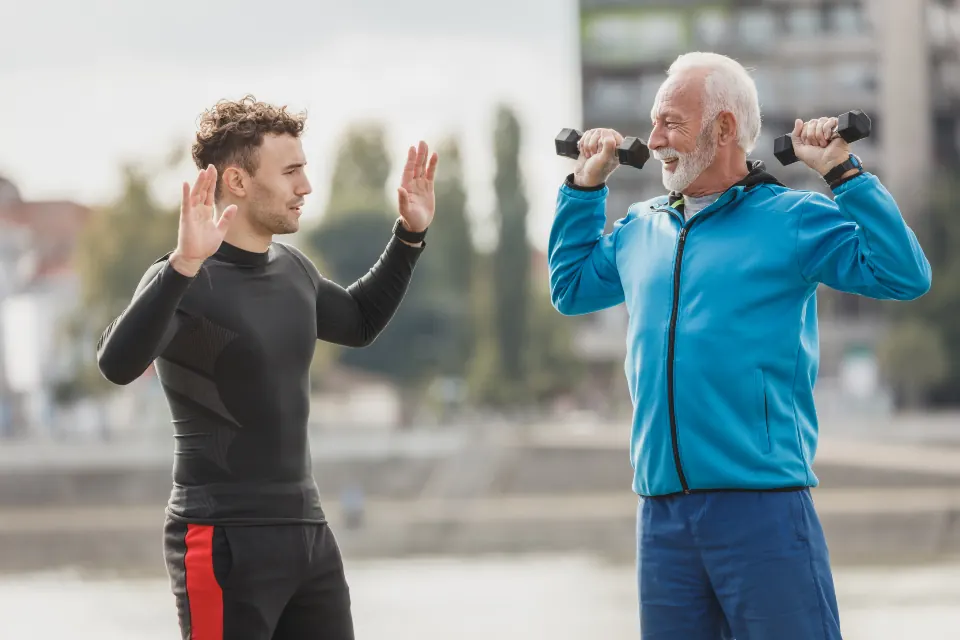
Muscle-strengthening is the part many people skip. It does not have to mean a gym. Bodyweight movements (squats, wall push-ups, rows with a bag of books), resistance bands or light household weights can all count when you work the legs, hips, back, chest, abdomen, shoulders and arms, and you repeat the movements until they feel challenging.
A simple pattern is two sessions a week, with a rest day in between. If you want a structured, no-equipment plan, the 30-Day Home Workout Plan is built around short circuits and walking days.
Sit less, when you can
The CDC also encourages adults to sit less and to replace some sitting time with light movement: standing up, stretching, or a short walk after a meal. You do not need special equipment for this.
When to check with a professional
If you have a health condition, are recovering from an injury, are pregnant, or have been very inactive, talk with a qualified health professional before you start a new exercise routine. Stop and get help if you feel chest pain, unusual shortness of breath, dizziness or pain that does not settle.
This article is general information for healthy adults, not a personal training or medical plan.
References
- U.S. Department of Health and Human Services. Physical Activity Guidelines for Americans, 2nd edition.
- Centers for Disease Control and Prevention. Adult Activity: An Overview.
This article is general information, not medical advice. For personal guidance, talk with a doctor, registered dietitian or other qualified professional. In a crisis in the U.S., call or text 988.

Free 7-Day Balanced Meal Plan
A simple week of breakfasts, lunches, dinners and snacks, plus a grocery list. Join the FitVibeLife email list and get it free. Occasional emails with new posts and guides; unsubscribe any time.
Related posts

Strength Training Twice a Week: A Simple Home Start
How to start muscle-strengthening work at home two days a week, in line with CDC guidance, using bodyweight movements and a short, repeatable session.

How to Build a Walking Habit That Actually Sticks
Forget all-or-nothing step goals. Start where you are, attach walks to things you already do, and grow slowly.

A 20-Minute Home Workout You Can Do With No Equipment
A simple full-body circuit for small spaces: warm-up, three rounds, cool-down, and easy ways to make it harder or gentler.